
North Phoenix BJJ Blog | Brazilian Jiu-Jitsu Tips, News & Academy Updates
The Strong Heart Academy blog covers BJJ training tips, kids martial arts, competition prep, and life lessons from the mats — written by Professor Mike Martin and our coaching staff in North Phoenix, AZ
Brazilian Jiu-Jitsu, Kids BJJ, and Martial Arts Training in North Phoenix
At Strong Heart Academy, our blog shares insights from decades of experience as one of the longest-running Brazilian Jiu-Jitsu academies in the North Phoenix valley, with lineage connected to Joe Moreira and Caio Terra. Read our articles covering Brazilian Jiu-Jitsu for kids and adults, women’s BJJ, fitness, self-defense, competition preparation, and the benefits of martial arts training for the entire family. Our goal is to provide valuable training knowledge, academy updates, and practical BJJ insights for students of all experience levels throughout Phoenix and the surrounding communities.


Leg Locks from Half Guard: Demonstration
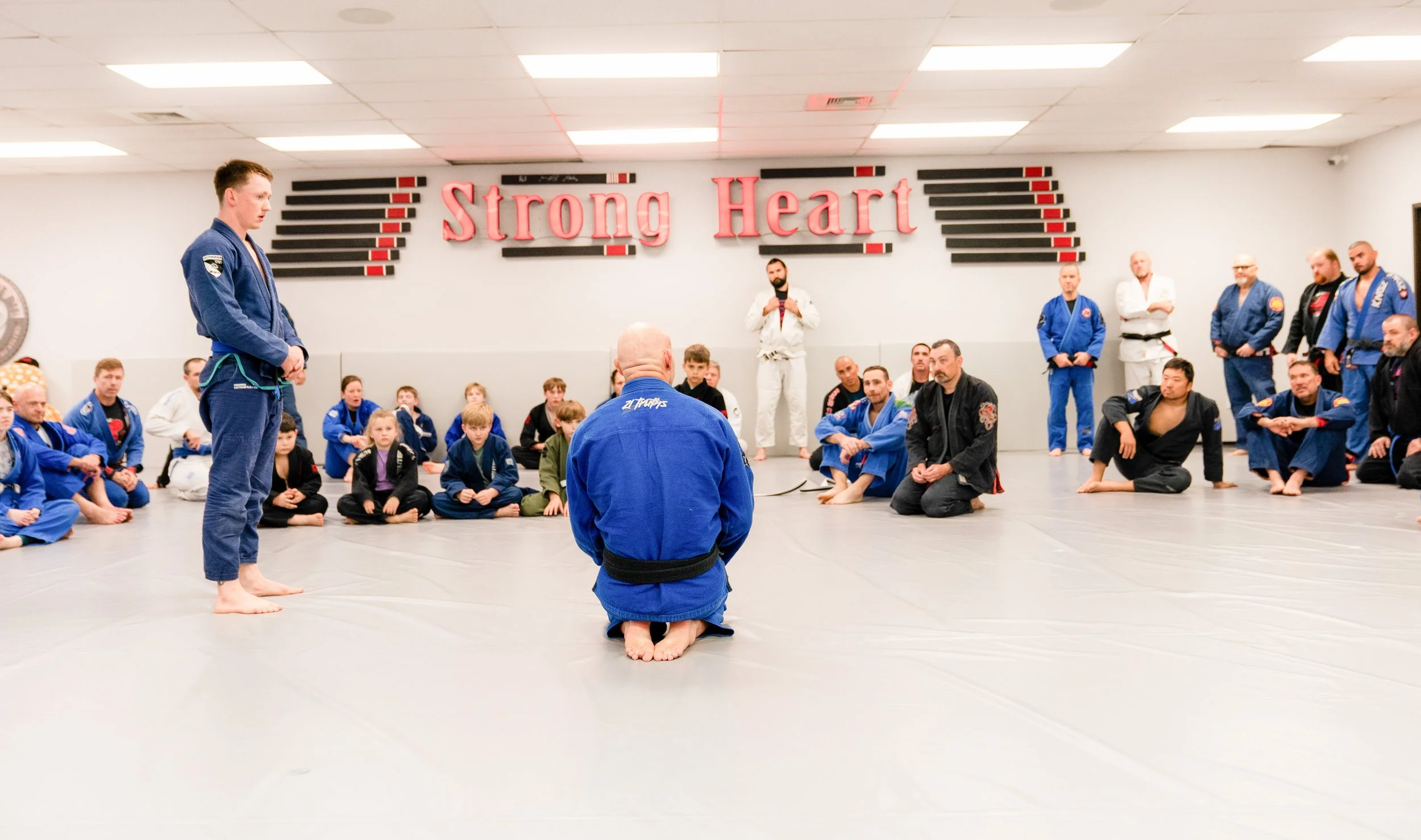
Mike Martin, Owner of Strong Heart Academy, Brazilian Jiu Jitsu in Phoenix Arizona, and third degree black belt, demonstrates leg locks from half guard.
Mike Martin, Owner of Strong Heart Academy, Brazilian Jiu Jitsu in Phoenix Arizona, and third degree black belt, demonstrates leg locks from half guard.
Watch the video below:
Leg Lock from Half guard taught by Mike Martin From Strong Heart Jiu-jitsu
Yeah.
Okay. So we're gonna go in between the legs, reaching his heel with both hands and I need to push his knee under my armpit.
So it's not my chest. It's here. Use your, I like to use my foot to push into him.
Okay. I have more strength this way. Sometimes I'm out here, he might roll me that way or it's more of a scramble.
When I come here, I'm gonna take his foot.
As I fall, I'm pulling his foot outward. Okay. Now when I catch it, I catch it with my head.
My arm comes underneath and I'm securing with my Gi.
Now, instead of hips, pulling your legs back and arching your back for the finish.
So he locks it up.
I dive in.
While leglocks are a part of BJJ, it's important to be aware that they can be dangerous and should be practiced with caution. Here are some best practices for offensive leglocks in BJJ:
1. Learn Proper Technique:
Start with the basics: Master fundamental leglocks like the straight ankle lock and kneebar before moving on to more advanced techniques like heel hooks.
Seek qualified instruction: Learn from experienced instructors who can teach you the correct mechanics and safety considerations.
Drill and repeat: Practice leglocks with a partner, focusing on smooth transitions and control.
2. Prioritize Safety:
Tap early and often: Don't hesitate to tap out if you feel any pain or discomfort.
Communicate with your partner: Let your training partner know your experience level and comfort with leglocks.
Control the position: Always maintain control of your opponent's leg and body to prevent injuries.
3. Be Aware of the Risks:
Leglocks can cause serious injuries: Be aware of the potential risks, including ligament tears and broken bones.
Not all leglocks are created equal: Some leglocks are more dangerous than others.
Consider the ruleset: Some leglocks may be illegal in certain competitions or at certain belt levels.
4. Use Leglocks Sparingly:
Don't rely on leglocks: Develop a well-rounded game that includes other submissions and positions.
Use leglocks strategically: Choose the right time and place to attack with a leglock.
Be respectful of your training partners: Not everyone is comfortable with leglocks.
5. Continue Learning:
Stay up-to-date: The leglock game is constantly evolving, so it's important to stay current on the latest techniques and strategies.
Watch and study: Watch videos of high-level leglock practitioners to learn from the best.
Attend seminars and workshops: Take advantage of opportunities to learn from experts in the field.
Remember, leglocks are a powerful tool in BJJ, but they should be used responsibly and with respect for your training partners.
By following these best practices, you can help to ensure a safe and productive learning experience.
Sources and related content
Thank you.
